From Groceries to Bills: How UPIPe Fits into Everyday Digital Spending
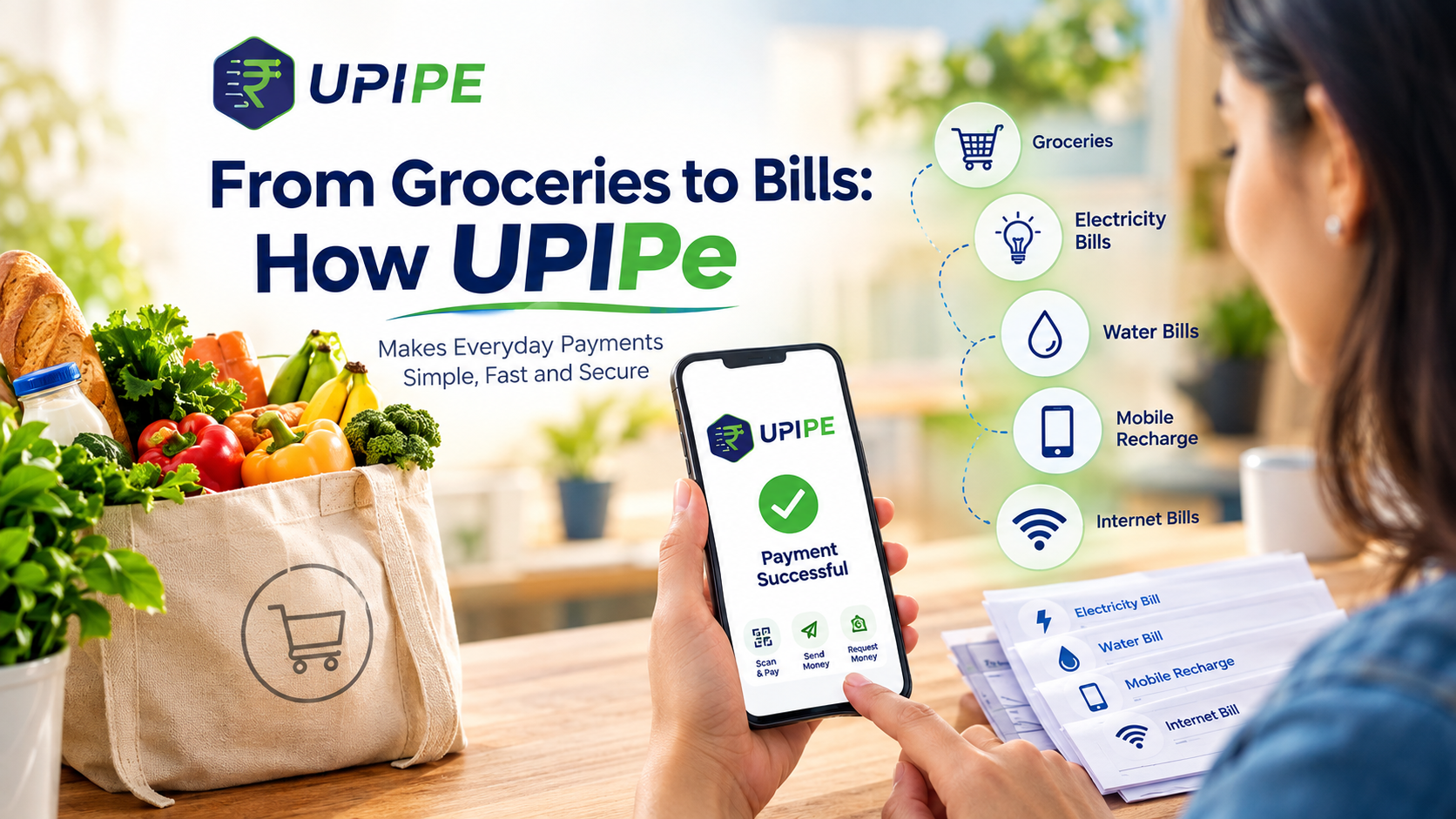
Digital payments have become a normal part of everyday life in India. From paying electricity bills and recharging mobile phones to buying groceries, ordering food, and shopping online, people now handle a large part of their daily spending digitally.
What was once considered a convenient alternative to cash has now become the preferred way to make many routine payments. UPI, in particular, has made digital transactions simple, quick, and accessible to millions of Indians.
Platforms such as UPIPe are part of this growing digital payment ecosystem, helping users make everyday money transfers and payments more convenient. The bigger change, however, is not just about how people pay. It is about how financial services are adapting to the way Indians actually spend money every day.
The Everyday Spending Reality
Think about a typical month for an Indian household.
There are electricity and water bills, mobile and DTH recharges, broadband payments, grocery shopping, medicines, fuel, food orders, and countless small purchases from neighbourhood stores.
Individually, many of these payments may seem small. But together, they represent a significant portion of a household's monthly spending.
Today, many of these transactions are completed through UPI and other digital payment methods. A customer can simply scan a QR code at a local shop, enter an amount, and complete the payment within seconds.
This has changed consumer behaviour significantly.
People no longer need to carry cash for every small purchase. A ₹50 snack, ₹200 grocery purchase, ₹500 medicine bill, or a monthly electricity payment can all be handled digitally.
The important point is that digital payments are no longer limited to large online purchases. They have become part of everyday spending.
Why Everyday Digital Payments Matter
For many consumers, the most frequent transactions are not expensive purchases. They are routine expenses that happen throughout the month.
A person might make several UPI payments in a single day without even thinking about it. One payment could be for breakfast, another for transportation, another at a local grocery store, and another for an online service.
This frequency makes digital payment platforms increasingly important.
The convenience is particularly useful for small businesses and local merchants as well. Instead of relying entirely on cash, shop owners can accept digital payments through QR codes and receive money directly into their accounts.
For consumers, this means faster payments. For businesses, it can mean easier collection and better transaction records.
This is where platforms such as UPIPe can fit naturally into the everyday payment experience by supporting convenient digital money transfers and payment activity.
From Bills to Local Shopping
One of the biggest advantages of digital payments is their flexibility.
Users can manage different types of expenses without switching between multiple payment methods. Utility bills, recharges, shopping, food, and local purchases can all become part of the same digital payment routine.
For example, imagine someone returning home after work and stopping at a neighbourhood grocery store. Instead of searching for cash, they can scan the merchant's QR code and complete the payment digitally.
The same convenience applies to larger recurring expenses.
A monthly electricity bill that once required a visit to a payment centre can now be paid online. Mobile and DTH recharges can be completed in a few taps, while many other household services can also be managed digitally.
These small improvements may not seem dramatic individually, but they save time and make financial transactions much easier over the course of a month.
The Growing Role of UPI in Daily Spending
UPI has played an important role in changing the way Indians think about payments.
Earlier, digital payments were often associated with debit cards, credit cards, or online banking. Today, UPI has made digital transactions much more accessible.
A smartphone and a bank account can be enough to make many everyday payments.
The simplicity of QR-based payments has also helped digital transactions reach beyond large cities and online shopping platforms. Local vendors, small stores, service providers, and street businesses can now participate in the digital economy.
This is an important development because everyday spending happens everywhere, not just on large e-commerce websites.
A payment ecosystem that supports both online and offline transactions is therefore much closer to the way people actually manage their money.
Making Digital Payments More Convenient
Convenience is one of the main reasons people continue to adopt digital payments.
A good payment experience should not make users think too much about the technology behind the transaction. It should simply allow them to send or receive money quickly and securely.
For users, this can mean:
Faster everyday payments
Less dependence on physical cash
Convenient bill and recharge payments
Easy QR-based transactions
Digital records of transactions
Greater flexibility when shopping online or offline
For businesses, digital payments can provide another practical advantage: easier collection of customer payments.
A small retailer, for example, can accept payments digitally without needing a complicated payment setup. This can make digital transactions more accessible to businesses of different sizes.
Security Is Just as Important as Convenience
As digital payments become a bigger part of everyday life, security becomes increasingly important.
Convenience should never mean ignoring basic payment safety.
Users should always verify the recipient before sending money, avoid sharing their UPI PIN, and be cautious when someone asks them to approve an unexpected payment request.
It is also important to remember that a UPI PIN is used to send money, not to receive it. Users should never enter their PIN simply because someone claims they need it to transfer money to them.
Similarly, suspicious links, fake cashback offers, unknown QR codes, and unsolicited payment requests should be treated carefully.
The more frequently people use digital payments, the more important these simple security habits become.
A Better Fit for Modern Indian Spending
The evolution of digital payments reflects a larger change in consumer behaviour.
People want financial services that fit naturally into their daily routines. They do not necessarily want complicated processes or separate systems for every type of transaction.
They want to pay a bill when it is due, transfer money when needed, shop at their favourite store, and complete a QR payment without unnecessary steps.
This is why the future of digital payments is likely to be centred around convenience, accessibility, speed, and security.
Platforms like UPIPe can play a role in this changing environment by making digital money transfers and payment experiences easier for everyday users.
The Future of Everyday Digital Spending
India's digital payment ecosystem continues to evolve.
As smartphones, internet access, UPI, QR payments, and online financial services become increasingly common, the distinction between online and offline spending is becoming smaller.
A local grocery purchase can be digital. A utility bill can be paid from home. A small business can receive customer payments through a QR code. A person can transfer money to a family member without visiting a bank.
These are no longer unusual behaviours. They are becoming part of everyday financial life.
The next stage of digital payments will likely focus on making these experiences even more seamless while maintaining strong security and user trust.
Conclusion
From paying electricity bills to buying groceries at a neighbourhood store, digital payments have become deeply connected to everyday Indian spending.
UPI has made many of these transactions faster and easier, while QR payments have helped digital transactions become part of both online and offline commerce.
The real value of this transformation is not simply the speed of a single transaction. It is the convenience created when hundreds of everyday payments can be managed digitally throughout the year.
As India's digital payment ecosystem continues to grow, services such as UPIPe represent the broader movement toward simpler, smarter, and more convenient ways to manage everyday money transfers and payments.
The future of digital payments is not only about paying online. It is about making everyday spending easier, wherever it happens.